
The Ranch Lifestyle: More Than an Investment
Understanding the Reality and Reward of Ranch Ownership
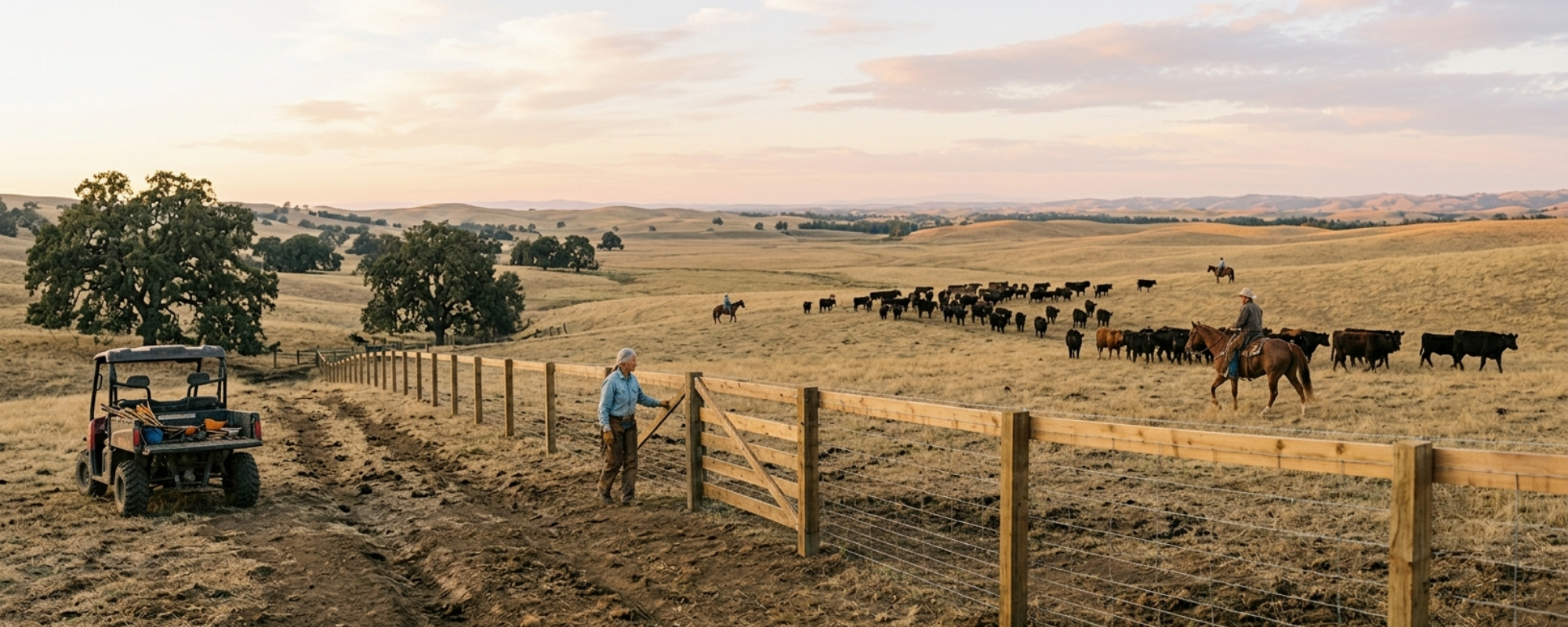
For many buyers, the idea of owning a ranch begins with an image.
Open land stretching to the horizon. Quiet mornings. A slower pace. A connection to something enduring and real.
In today’s digital world, that image is often simplified. Ranch life is frequently presented through curated moments. Golden sunsets, clean boots, and peaceful pastures. It is an appealing picture, but it is only part of the story.
The reality of ranch ownership runs deeper.
Beyond the Image
Those who live and work on ranches understand that the lifestyle is not defined by still moments. It is shaped by responsibility.
Ranching is not passive. It is not occasional. It is constant.
It is early mornings and late nights. It is checking water in dry seasons and moving cattle ahead of storms. It is maintaining fences, managing land, and making decisions that affect both the operation and the long term condition of the property.
The work is not always visible, but it is always present.
Ben Higgins, Director of Agricultural Operations for Hearst Ranches and a fourth generation California rancher, described one example during branding season at the Jack Ranch. Days often begin before sunrise, with crews already saddling horses, gathering cattle, organizing medications, and preparing equipment long before most people are awake. By lunchtime, more than 150 calves may already have moved through the chute, with cleanup and preparation for the following day still ahead.
And even when everything is carefully planned, ranching has a way of testing resilience. Broken water lines, flat tires, equipment failures, and changing weather conditions are simply part of the process. As Higgins explains, resilience and perseverance are essential qualities in ranching because the unexpected is never far away.
For buyers, understanding this distinction matters. Ranch ownership is not simply about acquiring land. It is about stepping into a role that requires commitment, awareness, and discipline.
Stewardship, Not Just Ownership
At its core, ranch ownership is about stewardship.
Land does not remain productive on its own. It must be managed, respected, and understood. Every decision, from grazing patterns to water usage, has a lasting impact.
Elena Clark, owner of Twisselman Grain & Cattle, a fifth generation California rancher, and San Luis Obispo County’s 2017 Cattleman of the Year, explains that stewardship often means balancing tradition with adaptation.
“We hold to some traditions and make new ones to change with the times, always with care of the land in mind,” she shared.
Markets evolve, climates shift, and operations adjust accordingly. Elena noted that their ranch transitioned from running both cows and stockers to focusing solely on cows and calves because increasingly hot summers made it difficult for stockers to gain sufficient weight.
That long view defines stewardship.
Ben Higgins echoed a similar perspective through the conservation work at Hearst Ranches. Today, the Hearst Ranch is permanently protected from commercial development through a conservation easement preserving not only a working cattle operation, but also one of California’s most significant coastal ecosystems. At the Jack Ranch, grazing operations have even been integrated alongside a large-scale solar project designed to reduce development pressure while supporting the ranch financially.
For many buyers, this responsibility becomes the most meaningful part of ownership. It creates a direct connection between effort and outcome, and between today’s decisions and the future of the land.
This is what separates ownership from stewardship. And it is where real value is created.
The Reward Behind the Work
The demands of ranch life are real. But so are the rewards.
There is a level of independence that comes with owning and managing land. A clarity that is difficult to replicate elsewhere. A connection to a place that strengthens over time.
The quiet moments are not staged. They are earned.
Elena Clark recently reflected on the feeling that comes after shipping calves and pregnancy checking cows, work that requires extensive preparation, long hours, and coordination across seasons.
“There was a huge sigh of relief when we got through it,” she explained.
Those moments come only after months of demanding seasonal work. Winter often brings gathering cattle for branding, booster shots, and sorting bulls in and out. Spring shifts toward grading roads, maintaining firebreaks, spraying weeds, weighing calves, and preparing paperwork for cattle sales. Summer brings barley harvest, while Fall marks the beginning of calving season.
The reward comes not just from the landscape itself, but from knowing what it took to care for it.
For those who understand the rhythm, those moments carry meaning that goes far beyond the surface.
A Lifestyle That Endures
Ranch ownership is not defined by trends.
While markets shift and technology evolves, the fundamentals of land, water, livestock, and stewardship remain constant. Ranches are held for decades, often generations. They are shaped slowly, through consistency, effort, and informed decision making.
Ranching also teaches resilience in ways few other lifestyles can. If cattle are out of water, the problem has to be solved. If a storm damages roads or fences, repairs cannot wait.
As Elena Clark explained, ranching requires independence, but also teamwork.
“Ranchers are stewards of the land and caretakers of the animals,” she said. “If the cows are out of water you have to fix it. You have to do what you need to do.”
At the same time, ranch life reinforces the importance of family and community. Large days often require everyone working together, helping where needed, and stepping in without hesitation.
For buyers, this creates an opportunity to step into something lasting.
Not just an asset, but a way of life that holds its value in more ways than one.
A Thoughtful Approach to Ownership
Entering ranch ownership requires perspective.
It means understanding both the appeal and the responsibility. It means recognizing that the value of a ranch is not only measured in acreage or production, but in how it is managed over time.
Patience is equally important.
Ben Higgins emphasized that new ranch owners often underestimate how long meaningful improvements take. Whether building infrastructure, improving a herd, repairing water systems, or navigating permits, ranch ownership rewards long term thinking and steady decision making rather than rushing results.
He also noted that successful ranch ownership begins with listening and learning from experienced operators and neighbors. Ranching is deeply rooted in practical knowledge earned over time.
At Clark Company, this perspective comes from experience. We do not view ranch ownership from the outside. We live it.
That experience allows us to guide buyers with clarity. Not just in evaluating a property, but in understanding what ownership truly involves.
The Long View
The ranch lifestyle is not defined by a single moment or a single season. It is built over time through discipline, stewardship, resilience, and commitment to the land.
For those prepared to embrace both the responsibility and the reward, it offers something increasingly rare. A life grounded in purpose, independence, and continuity.
Ranch ownership is more than an investment.
It is a decision about how you want to live, what you want to build, and what you intend to carry forward.